
Thrifted fabric as book covers
& 7 tips for making book covers without a paperback
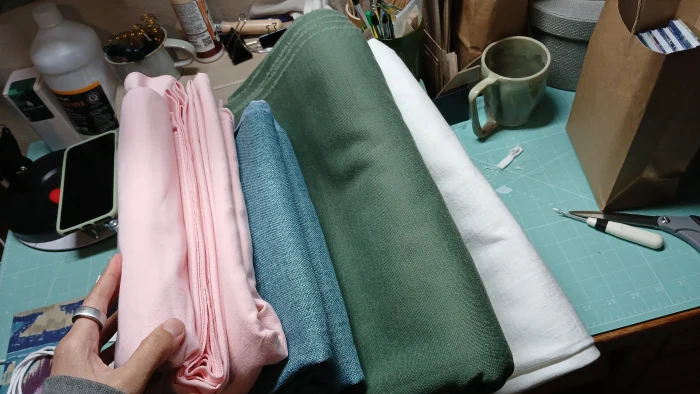
Secondhand fabric is so abundant—just like recycled paper.
Tablecloths, curtains, bedsheets, old jeans—you name it. It’s everywhere and keeps emerging. And since my crafting principle is sustainability, extending the lifespan of these perfectly functional fabrics is my mission!
That’s why I use them to make notebook covers.
Where I get the fabric
I source fabric from thrift stores like Value Village or Goodwill. Sometimes, I get them from family members too.
Ideally, I look for plain-colored, non-stretchy, and medium-thick fabrics such as tablecloths, curtains, or lightly used jeans.
How I make bookcloth
It’s very simple. I glue the book chipboards directly to the fabric without backing them with paper of any kind.
But as much as I want to keep it simple, it works better on some fabrics than others.
And that’s how I learned why it’s important to back the fabric with thin paper (like tissue paper or mulberry paper) before gluing the chipboards to it.
Paper-backing bookcloth, and why I hesitate to do it
Paper-backing fabric to make proper bookcloth is a common practice for bookmakers. It adds structure, strengthens the fabric, and prevents glue from seeping through.
There are a few ways to do this.
- Use a heat-and-bond material to attach the fabric to thin paper.
- Use wheat paste (a traditional bookmaking adhesive) to bond thin paper to the fabric.
The first method is quick and practical—you just need a heat-and-bond sheet (from a craft store or online), iron it onto the fabric, remove the plastic lining, then iron on the thin paper to complete the bond. But this creates plastic waste.
The second method is more eco-friendly but much more time-consuming. You buy the wheat paste, cook it, apply it to the paper, stick the paper to the fabric, and wait for it to dry.
It’s a tricky decision.
Creating plastic waste is something I want to avoid when crafting, but at the same time, spending a ton of time and effort on one process is far from practical.

My tips for turning fabric into bookcloth
I don’t yet have my definite formula, but after several months of turning thrifted fabrics into bookcloth (without paper-backing), I’ve found that:
- Thrifted jeans make great bookcloth! With their classic denim texture, durability, and thickness, they hold well on chipboard without glue seeping through.
- Non-stretchy fabric works better than stretchy ones. It’s also less prone to glue seep-through.
- Light-colored fabric is a lifesaver, especially for thinner fabric. It hides any glue marks when I do a poor job of distributing glue on the chipboards.
- Choose medium-thick to thick fabric, like denim, over thin ones like cotton when making hardcover books. This helps solidify the book structure—especially the hinges between the spine. With thin fabric, I find the hinges tend to be loose.
- Test new fabric first by gluing a small piece to chipboard before working on a real notebook. You’ll quickly see whether the fabric works well with your glue.
- The thicker the fabric, the trickier it gets when working on hinges, edges, and corners. I don’t go beyond the thickness of denim.
- Always put waste paper under the fabric when gluing and pressing chipboard. This keeps the fabric clean from your work surface. Change to a new waste sheet every time you apply glue to a new area.
Choosing fabric for book covers is something I’m continually learning and improving. My goal is to keep exploring, taking notes, and narrowing down the methods that work best for my preferences and align with my values.
I hope you find these tips helpful! 🙂

